Growth Factor Analog Peptide
5.0 Reviews
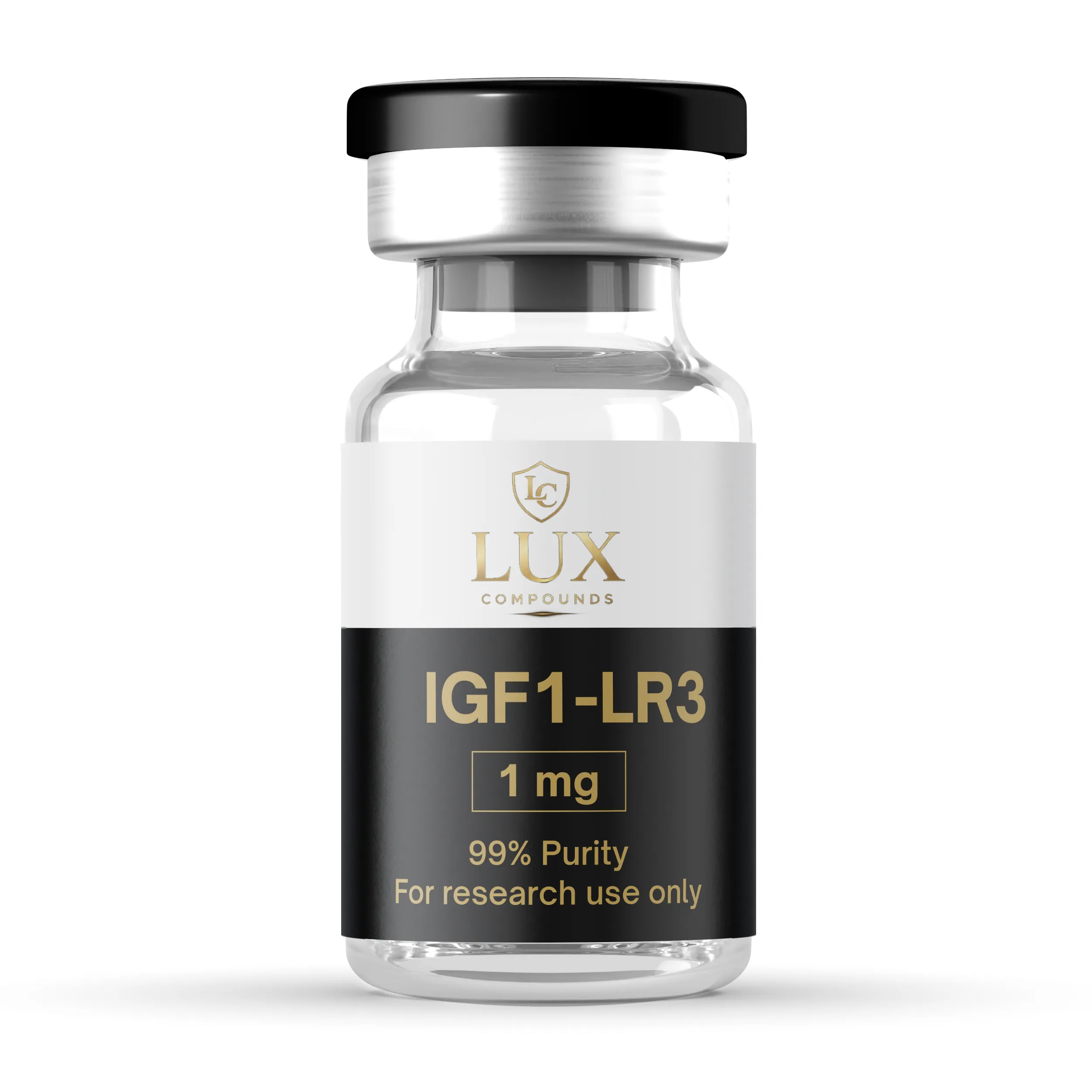
CAS: 143045-27-6Long Arginine 3-IGF-1Long R3 IGF-1LR3-IGF-1
An 83-amino acid synthetic analog of IGF-1 with lower binding protein affinity and a longer half-life, researched for its anabolic and tissue growth potential in preclinical studies. Premium Research Peptide.
$94.99 Original price was: $94.99.$85.49Current price is: $85.49.
We accept :

Third Party Tested by Freedom Diagnostics
The Science, Simplified
Gene Expression
Epigenetic Modulation
Upregulates 59% of affected genes Activates 47 DNA repair genes Suppresses inflammatory pathways
Gene Expression
Epigenetic Modulation
Upregulates 59% of affected genes Activates 47 DNA repair genes Suppresses inflammatory pathways
Gene Expression
Epigenetic Modulation
Upregulates 59% of affected genes Activates 47 DNA repair genes Suppresses inflammatory pathways
Key insight: These structural modifications reduce its affinity for IGFBPs by up to 1,000-fold, allowing more of the peptide to remain in its “free” active state to interact with cellular receptors.
Key insight: While native IGF-1 has a half-life of roughly 10–20 minutes, IGF-1 LR3 maintains a biological half-life of 20–30 hours, allowing for sustained anabolic signaling with less frequent administration in research protocols.
What clinical studies report
GF-1 LR3 is a powerful growth factor analog; research protocols typically focus on monitoring glycemic levels and systemic growth markers.
🧿 Common Digestive Issues
Hypoglycemia
mild
Lethargy
mild
Muscle Pump/Tightness
mild
Safety Advantage
Potency & Efficiency
📊 Discontinuation Rates
🚫 Trial Exclusions
⚡ Regulatory Status
💡 Researcher Notes
Technical specifications for each component
🔬 Molecular Profile
What Is IGF-1 LR3?
CAS Number
143045-27-6
Molecular Weight
9,117.60 g/mol
Amino Acids
83
Formula
C400H625N111O115S9
Sequence
MFPAMPLSSL FVNGPRTLCG...
🧊 Storage Requirements
How It Differs from Native IGF-1
N-terminal extension
+13 amino acids (MFPAMPLLSLFVN)
Position 3 substitution
Glu → Arg
Total length
83 vs 70 amino acids
IGFBP affinity
Dramatically reduced
IGF-1R affinity
Retained
📋 Research Status
Where Each Stands
Classification
Investigational Peptide / Growth Factor
WADA Status
Strictly Prohibited (S2 category)
IGF-1 LR3 studies
400+ publications
IGF-1 class
10,000+ publications
Common questions about IGF-1 LR3
Peer-reviewed research
Not for human consumption. This product is sold exclusively for research and educational purposes. It is not intended to diagnose, treat, cure, or prevent any disease.
All clinical trial data and research findings presented on this page are sourced from peer-reviewed journals and official publications. They are provided for educational reference only and should not be interpreted as medical advice or product claims.
By purchasing this product, you confirm that you are a qualified researcher and will use it in accordance with all applicable laws and regulations.